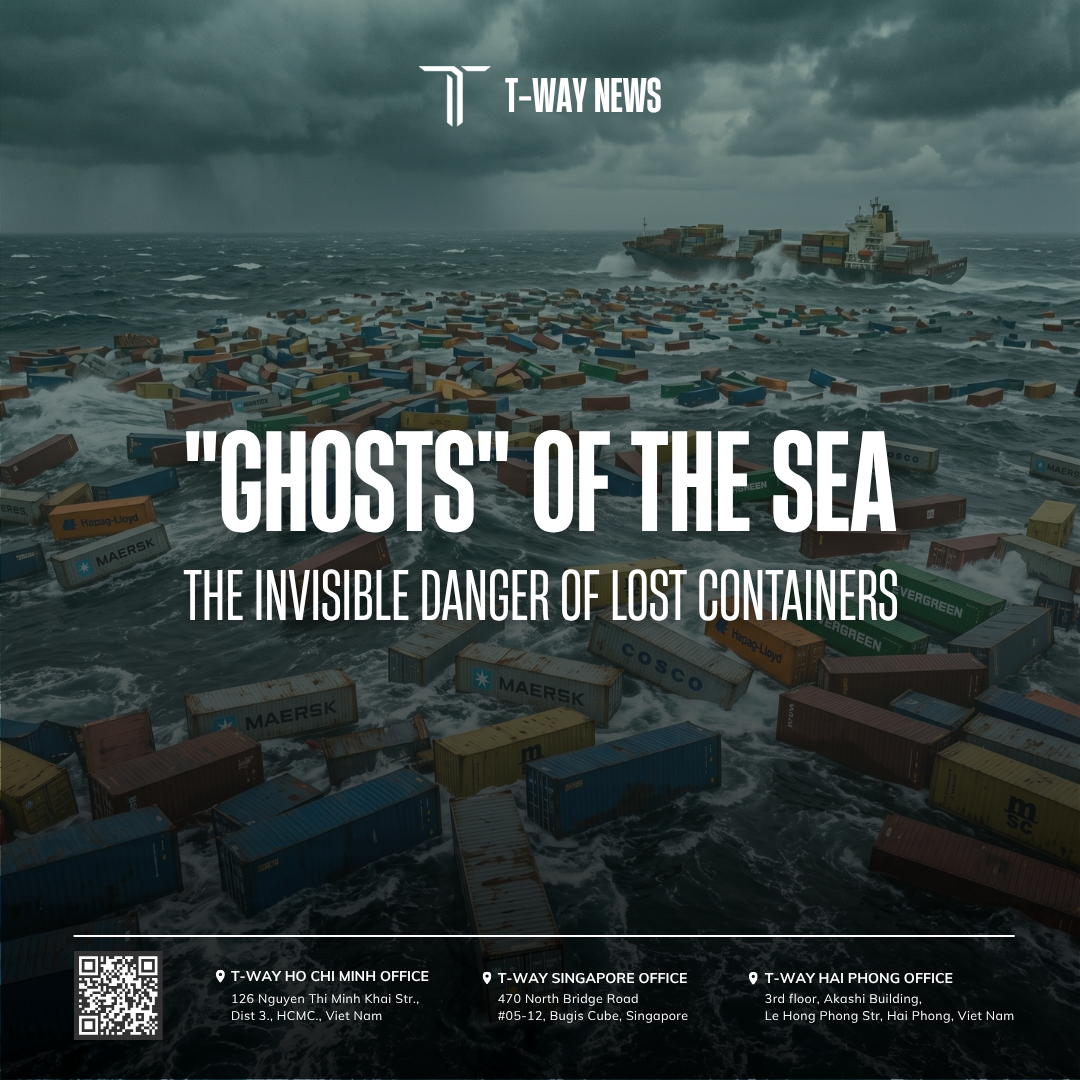

THE "GHOSTS" OF THE OCEAN: WHEN CONTAINERS BECOME INVISIBLE HAZARDS
--------------------------------------------------------------------
Did you know: Right at this very moment, as you are reading this article, there are hundreds of "steel islands" weighing tens of tons drifting aimlessly, bobbing in and out of sight across the world's oceans?
They are known as "Ghost containers" — one of the most thrilling yet dangerous hidden corners of the global maritime industry.
1. A Startling Number: 1,500 Containers "Vanish" Every Year
According to statistics from the World Shipping Council (WSC), an average of 1,000 to 1,500 containers fall off giant cargo ships into the sea each year.
The main causes include:
Mother Nature's Wrath: Hurricanes with waves towering over a dozen meters high in the middle of the ocean.
Parametric Rolling: A phenomenon where a ship suddenly and violently tilts when hit by waves from the front or back, causing the load-bearing lashings to snap like threads.
2. Why Are They Called "Ghosts"?
When falling into the sea, not every container sinks immediately to the deep ocean floor.
If the container holds buoyant goods (like plastics, shoes, toys, or styrofoam) or if the volume of trapped air inside is large enough, this multi-ton steel box will float just below the water's surface.
The Invisible Threat: Because they float almost flush with the waterline, they are practically "invisible" to ship radars and very difficult to spot from a distance with the naked eye. For small cruise ships, sailboats, or fishing vessels, crashing into such a solid steel block at high speeds is no different from hitting an iceberg. The result is often a breached hull and the ship sinking within minutes.
3. Reluctant "Treasures" and Century-Spanning Journeys
When these containers are broken open by waves, they create fascinating phenomena that also double as environmental disasters:
The Rubber Duck Legend (1992): A container holding 29,000 rubber toy ducks fell into the Pacific Ocean. For decades afterward, these ducks drifted as far as Alaska, Hawaii, and even Iceland, helping scientists remap global ocean currents.
Nike Shoe Rains: Beaches were suddenly flooded with thousands of brand-new sneakers. The only catch was that they were scattered everywhere, forcing locals to go "looking for the other shoe" along the coastline.
Technological Transformation: Hunting the "Ghosts"